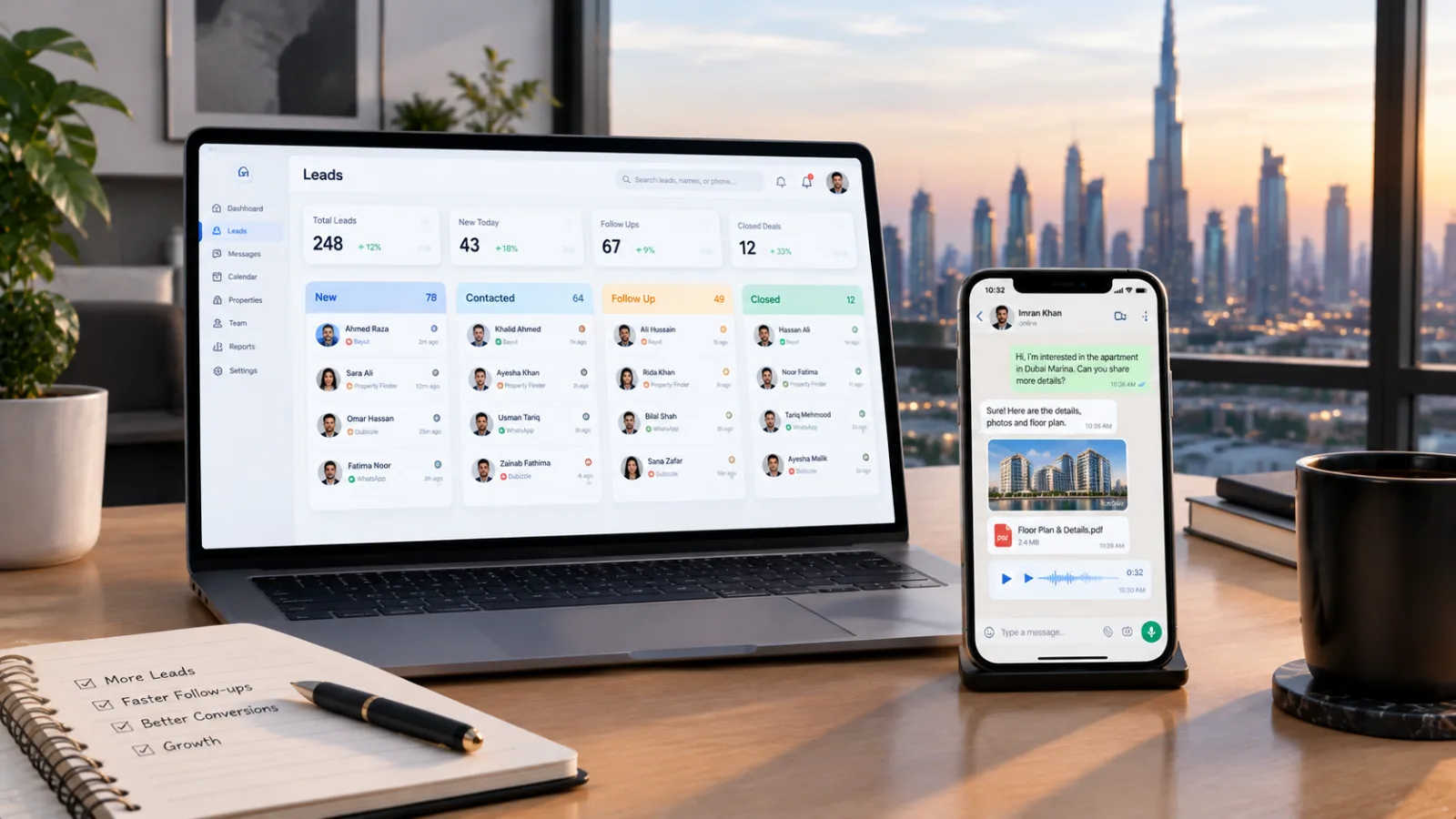
How to reply to property leads faster (and win more deals)
The agency that replies first usually wins the client. Here is a practical playbook for real estate teams in the UAE and Pakistan to answer every enquiry in minutes, not hours.
On this page
When someone enquires about a property, they rarely enquire about just one. They message three or four agencies about similar listings, often within the same hour. The agency that replies first, with a clear and helpful answer, usually gets the conversation. The others get ignored.
That makes reply speed one of the cheapest ways to win more deals. You don't need more leads or a bigger ad budget. You need to answer the leads you already pay for before someone else does.
This guide shows where replies get stuck in most agencies, what a good first reply looks like, and how to set up your team so no enquiry waits.
Why the first reply matters so much
A new enquiry is the moment a client's interest is highest. They have just seen a listing they like and they are ready to talk. Every hour that passes, that interest cools down and other agencies get their chance.
A fast reply also says something about your agency. Clients assume that if you answer quickly now, you will also be quick when they need a viewing, a document or a decision. A slow reply suggests the opposite, even if your service is excellent.
Where replies get stuck
Most agencies don't reply slowly because their agents are lazy. They reply slowly because of how leads reach them. These are the most common bottlenecks:
- Leads arrive in different places. Portal enquiries come by email, ad leads sit in a downloaded sheet, and WhatsApp messages land on whichever phone the number is on.
- Nobody owns the lead. A lead is forwarded to a WhatsApp group and everyone assumes someone else will call.
- Late-night enquiries. Many clients browse in the evening. Their messages wait until the next morning, by which time they have spoken to another agency.
- The agent is busy. An agent at a viewing or in traffic can't reply properly, and there is no one to cover.
- No reminder for the second contact. The first message is sent, the client doesn't answer, and the lead is forgotten.
Fixing these is less about working harder and more about setting up a simple system.
The 5-step speed-to-lead playbook
1. Bring every lead into one place
If your team has to check five inboxes, someone will always be late. Put portal enquiries, ad leads, WhatsApp chats and walk-ins into one shared list. Each lead should show where it came from, when it arrived and who is responsible for it.
2. Give every lead an owner straight away
A lead without an owner is a lead nobody calls. Decide how new leads are shared:
| Method | How it works | Good for |
|---|---|---|
| In turn | Each new lead goes to the next agent in the list | Fair sharing in teams with similar agents |
| By a manager | A manager assigns each lead to the best person | Specialised teams, such as rentals vs. off-plan |
| By area or project | Leads for a project go to the agent who knows it | Agencies selling for specific developers |
Whichever method you choose, the agent should know about the lead within seconds, not when they next check their email.
3. Have a strong first reply ready
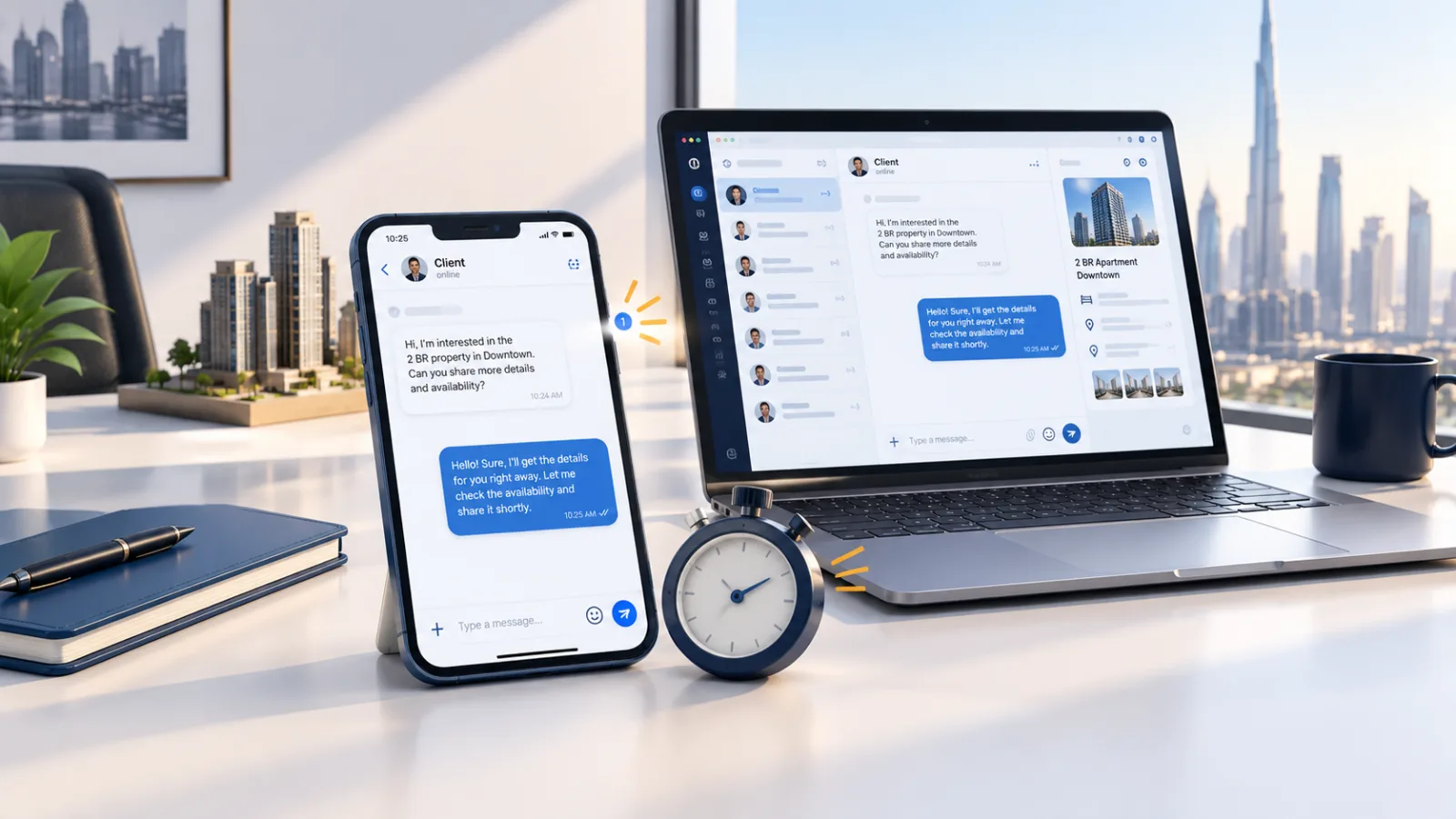
Speed is useless if the reply is weak. A good first reply is short and does three things:
- Confirms what the client asked for, so they know a person read it.
- Asks one useful question to move the conversation forward.
- Introduces the agent by name.
For example:
Avoid long paragraphs, attachments in the first message and generic replies like "Please call us." Keep it human and specific.
4. Cover the nights and weekends
You have two options here. You can set up an on-call rota so one agent checks new enquiries in the evening. Or you can use an assistant that replies automatically on WhatsApp, asks the basic questions (buying or renting, area, budget, bedrooms) and saves the answers, so the agent starts the next morning with a qualified lead instead of a cold "Hi".
If you automate, keep one rule: the assistant should never invent prices, listings or availability. Its job is to collect the requirement and hand over to a person.
5. Set the next follow-up before you close the chat
Most deals don't happen on the first contact. After every conversation, the agent should set a date for the next step: a call tomorrow, a viewing on Saturday, a check-in next week. When the date arrives, the agent gets a reminder.
This one habit stops leads from disappearing after the first message, which is where many agencies lose most of their potential deals.
How to measure your reply speed
You can't improve what you don't measure. Track these numbers every week:
- Time to first reply: how long a new lead waits before someone answers.
- Leads with no reply: enquiries that were never answered at all.
- Leads with no next follow-up: leads where nobody set a next step.
- Replies by agent: who is fast, and who might need help or fewer leads.
Review them in your weekly team meeting. The goal is not to blame anyone, but to see where leads are getting stuck.
Quick checklist
- All lead sources come into one list
- Every new lead has an owner within seconds
- Agents have a short first-reply template
- Night and weekend enquiries get an answer
- Every conversation ends with a next follow-up date
- Reply speed is reviewed every week
How EstateQube helps
EstateQube was built for exactly this problem. Leads from Bayut, Property Finder, Dubizzle, Facebook lead ads and WhatsApp arrive in one list, are assigned automatically or by a manager, and every agent gets reminded when a follow-up is due. The WhatsApp AI assistant replies day and night in English, Urdu and Arabic, so late enquiries are already qualified when your team starts work.
See how leads and follow-ups work or book a free demo to see it with your own leads.
- #lead management
- #response time
- #follow-ups
- #real estate agents